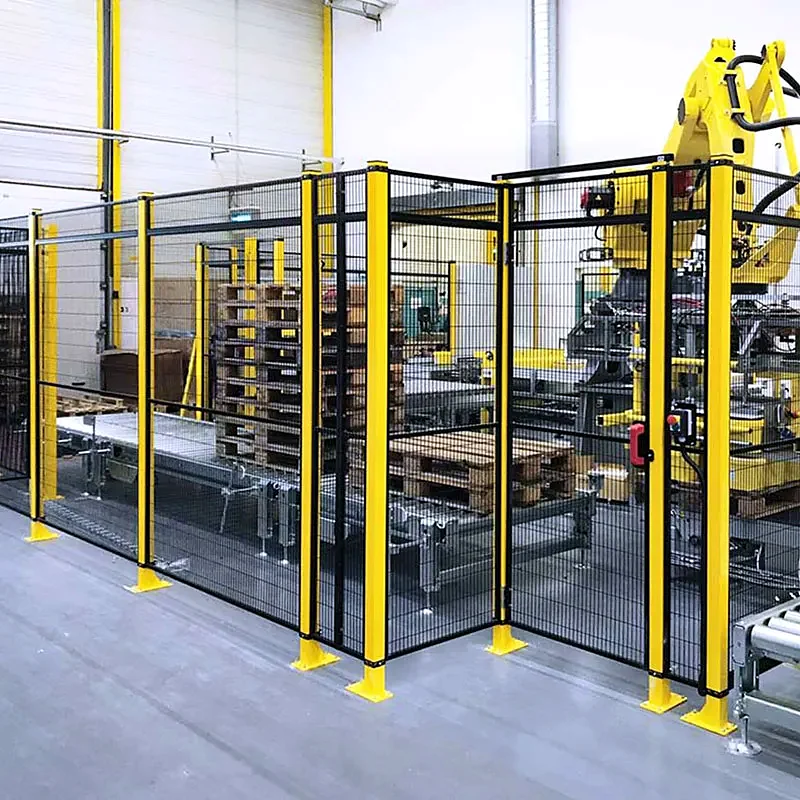
Access is a complete sequence—not just a switch on a gate.
A robot-cell access point must initiate the intended safe response, manage any run-down or residual hazard, permit entry at the correct time and prevent unexpected restart while a person may still be inside. The hardware and the control logic therefore need to be developed together.
Oxford Machine Guarding designs hinged and sliding access gates for routine operation, setting, maintenance, cleaning and recovery. We consider access frequency, door alignment, possible defeat, whole-body entry, visibility, escape and the behaviour of every machine connected to the cell.
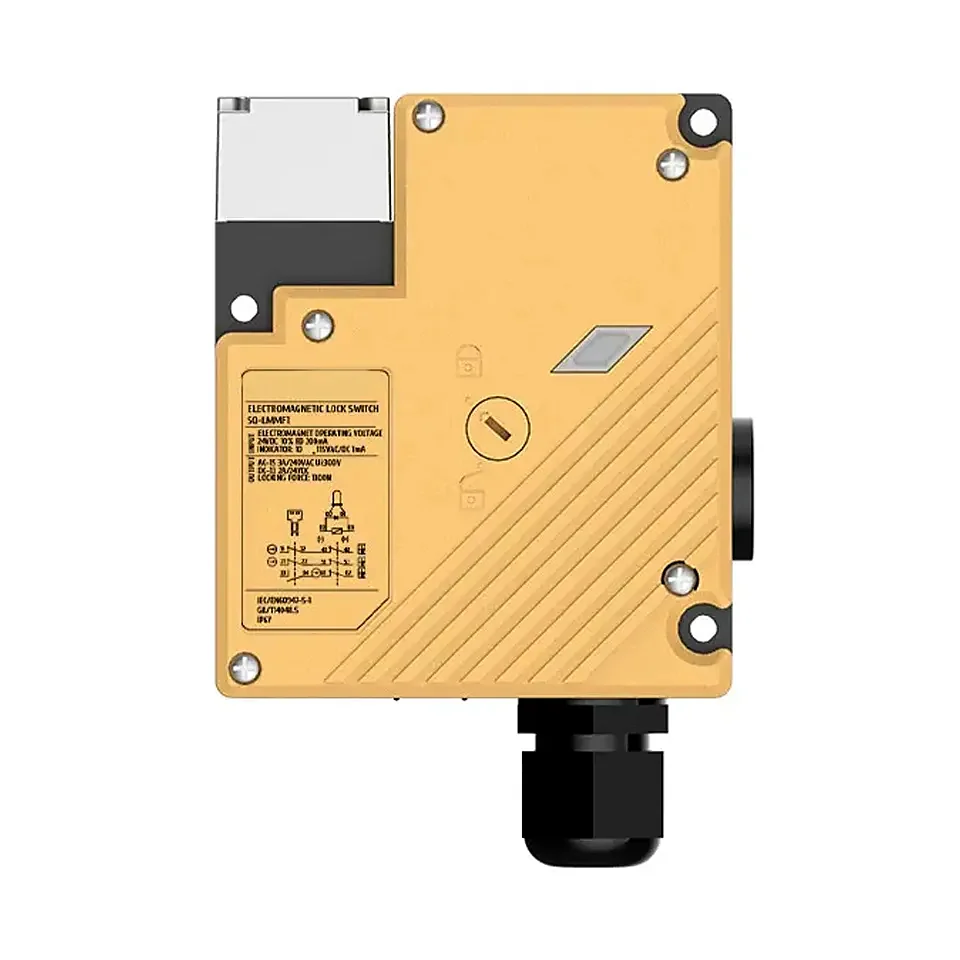
Interlocking or guard locking?
An interlock monitors guard position and triggers the defined safety response when the guard opens. Guard locking additionally keeps the guard closed until release conditions have been satisfied. Locking may be needed where the hazardous condition cannot stop before a person could reach it, or where controlled access is required for the process.
- Coded non-contact interlock switches
- Tongue and position switches
- Power-to-lock or power-to-unlock guard locking
- Escape release and emergency release
- Request-to-enter buttons and status indication
- Trapped-key exchange systems for complex entry
Whole-body access and escape.
Where a person can enter and close the gate behind them, the design must address the possibility that they are no longer visible from the reset position. Depending on the application, suitable measures can include escape release, trapped keys, key transfer, presence sensing, sequential reset or other controls that prevent a restart with a person inside.
Mechanical alignment and defeat resistance.
Even a correctly specified safety device can become unreliable if the gate sags, the actuator is poorly protected or the mounting allows simple manipulation. We consider hinges, stops, handles, latching, alignment tolerance, impact, cable protection and diagnostic access as part of the door assembly.
Typical project deliverables.
- Access-task and stopping-behaviour review
- Gate and hardware design
- Interlock or guard-locking device selection
- Safety-control interface specification
- Request, release, reset and status logic
- Functional testing and recorded results