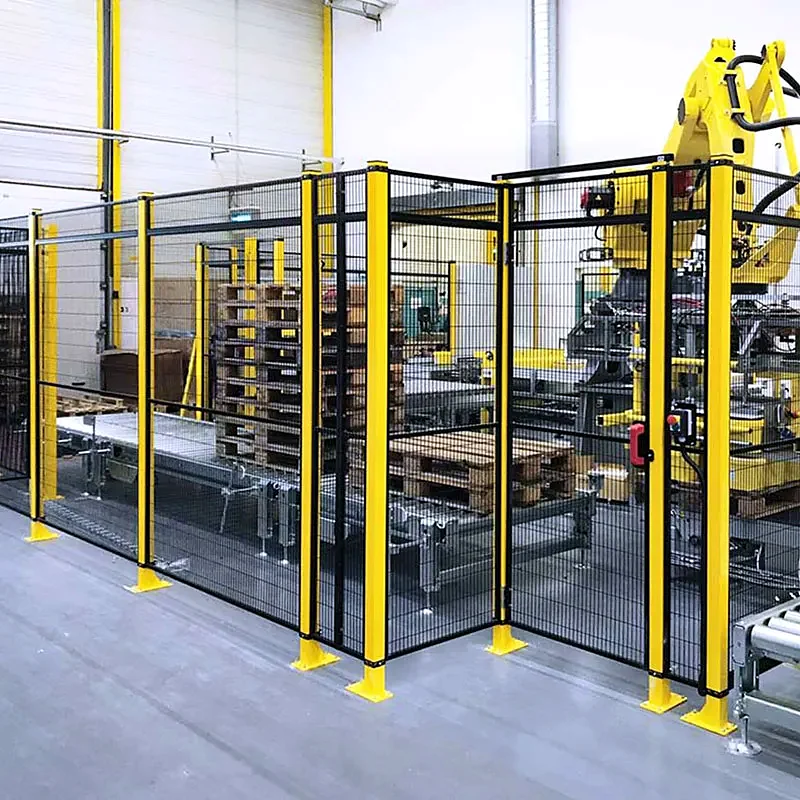
The safety function continues beyond the guard or sensor.
An interlock, scanner or emergency stop only provides an input. The safety-related control system has to detect that input, achieve the defined safe state, monitor relevant faults and manage reset and restart correctly. Every machine and energy source within the cell may need to respond.
Oxford Machine Guarding can develop or modify agreed safety-control functions as part of a guarding project. The scope is established from the hazards, required risk reduction, existing control architecture, robot interfaces, stopping behaviour and responsibilities between the machine builder, integrator and end user.
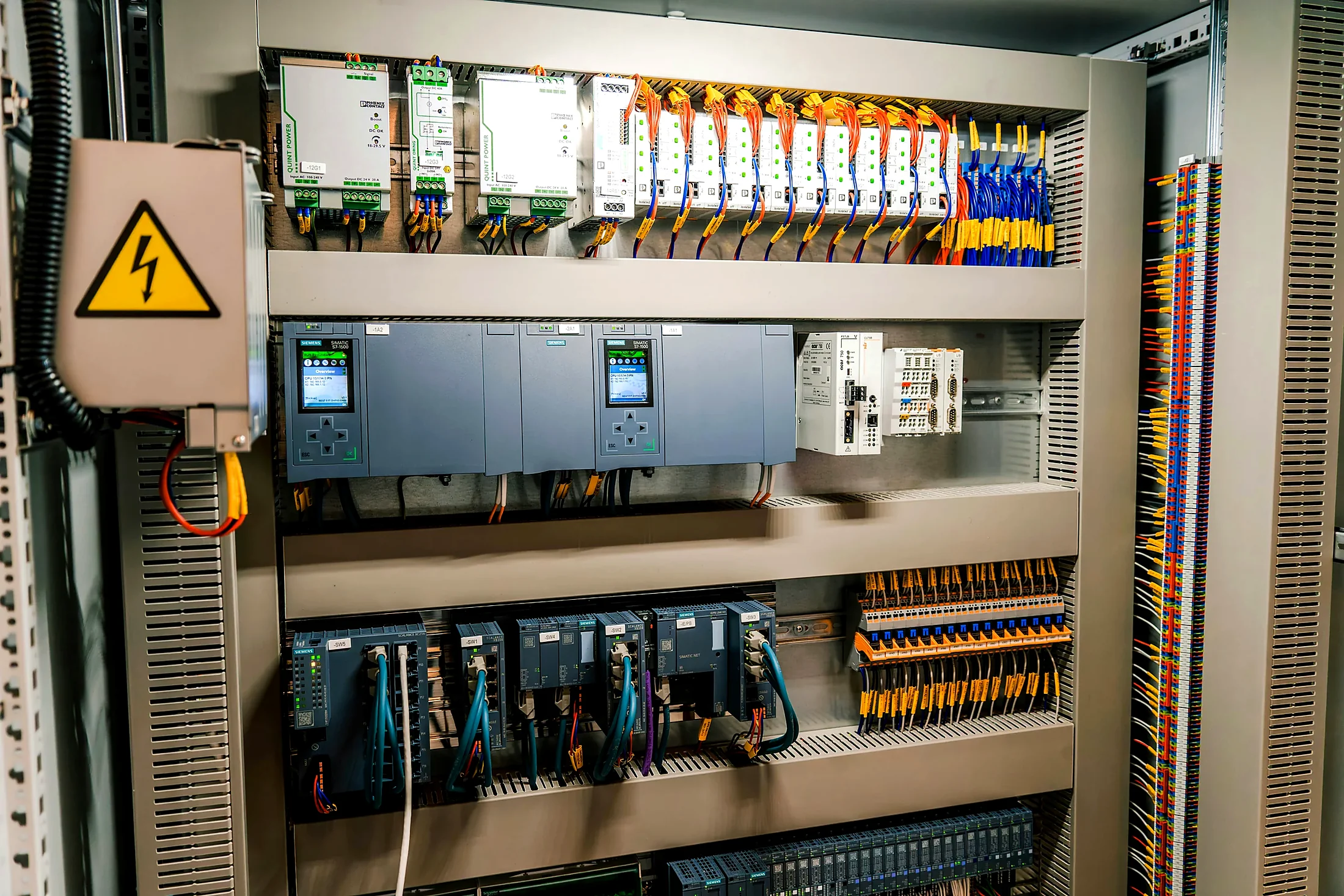
Safety relays and safety PLCs.
A dedicated safety relay can be suitable for a small, well-defined function. A safety PLC can support larger cells with several access points, devices, modes, zones and diagnostic requirements. The choice is based on the required architecture and maintainability rather than complexity for its own sake.
- Interlock and guard-lock monitoring
- Scanner, light-curtain and muting inputs
- Emergency-stop circuits
- Robot, drive and machine stop interfaces
- Reset, request-to-enter and release logic
- Status indication and diagnostics
Reset position and visibility.
The reset control should be outside the hazardous area and positioned so the person operating it can check the protected space as far as reasonably possible. Large or obstructed cells may need additional measures because one position cannot provide adequate visibility. Reset should not itself initiate hazardous movement unless the complete application specifically supports that behaviour.
Restart prevention.
Opening a gate, interrupting a protective field or operating an emergency stop must not create an automatic restart when the device is restored. The required sequence can include access request, controlled stop, guard release, entry, exit, guard closure, area check, safety reset and a separate production start.
Validation and change control.
Safety functions should be tested against the specification, including normal operation, access requests, device actuation, foreseeable faults, reset, restart and each operating mode. Configuration backups, drawings, test records and software change control may form part of the agreed handover.
Typical project deliverables.
- Safety-function and interface definition
- Control architecture and device selection
- Electrical design and panel modifications
- Safety logic implementation
- Functional testing and recorded results
- Configuration backup and agreed documentation