
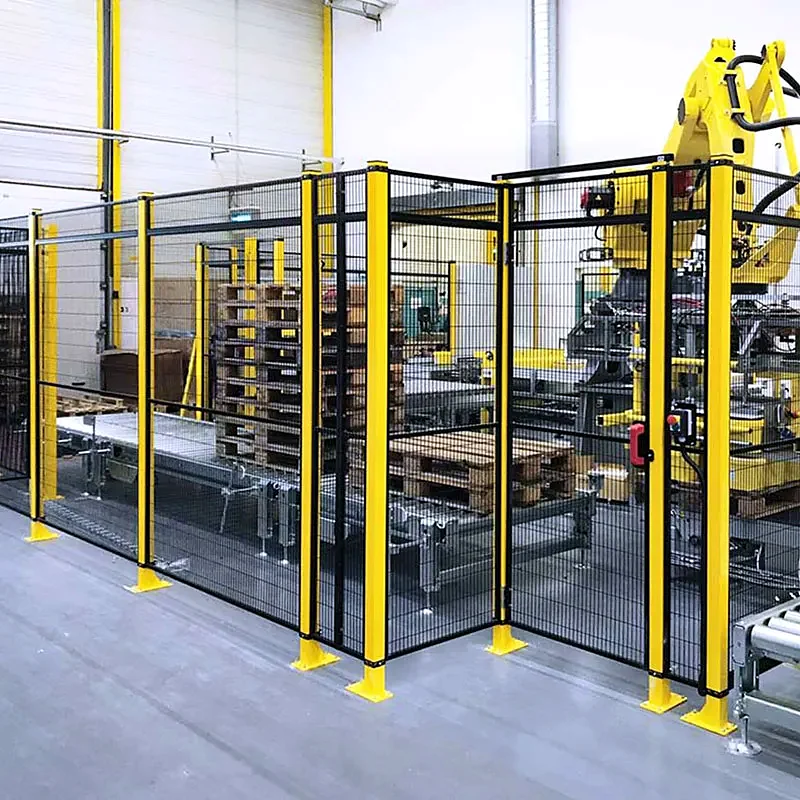
A physical boundary designed around the complete robot cell.
Robot-cell fencing prevents access to hazardous robot movement and the associated process risks, but its effectiveness depends on more than panel height or mesh size. The boundary must account for the robot envelope, tooling, payload, possible ejection, reach routes, climbing, openings, floor condition and every foreseeable access task.
Oxford Machine Guarding develops robot perimeter guarding around the actual application. We can review new automation cells, existing installations that need upgrading, relocated machinery and damaged or poorly arranged fencing. The project scope can cover site survey, mechanical design, manufacture, supply, installation and integration with access-control devices.
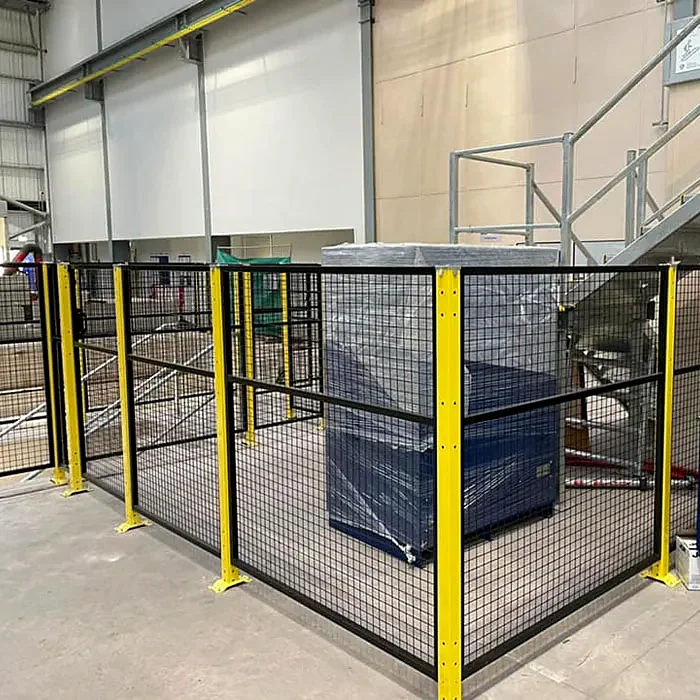
Mesh, solid and screened panels.
Welded mesh provides visibility and ventilation for many applications. Solid sheet, clear polycarbonate or screened panels may be required where the process introduces ejection, sparks, glare, fluids, heat or other hazards that a mesh barrier cannot contain. A cell can use several panel types where the risk changes around the perimeter.
- Modular mesh fencing and posts
- Solid steel or stainless-steel panels
- Clear impact-resistant viewing panels
- Welding screens and process containment
- Fixed, hinged, sliding or removable sections
- Floor interfaces, infill panels and service penetrations
Safe distance, reach and openings.
Fence position is set from the hazards, possible reach through or over the guard and the geometry of the equipment—not simply from the available floor area. Conveyor openings, pallet apertures, cable routes and gaps below panels also need to be reviewed because they can create a route to hazardous movement.
Maintainable construction.
A guard that makes routine work unnecessarily difficult is more likely to be damaged, removed or bypassed. We plan access for cleaning, lubrication, tool change, fault recovery and maintenance while keeping the safety intent clear. Post positions, door swing, removable panels, fasteners and service routes are coordinated with the cell layout.
Typical project deliverables.
- Cell layout and perimeter review
- Guarding concept and panel schedule
- Post, panel, gate and fixing design
- Manufacture and protective finish
- Installation coordinated with cell access
- Agreed drawings and handover information