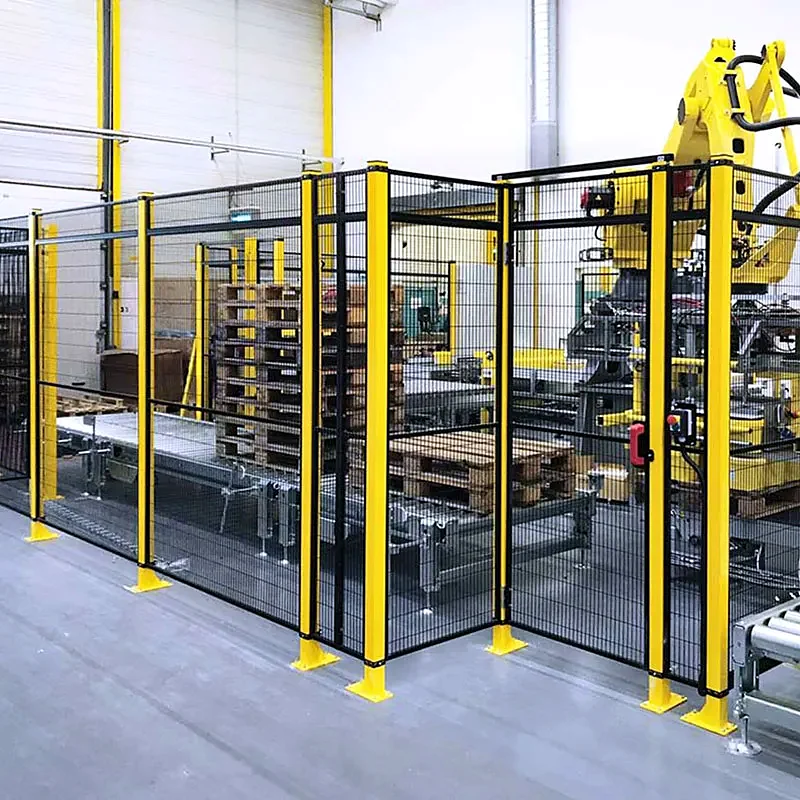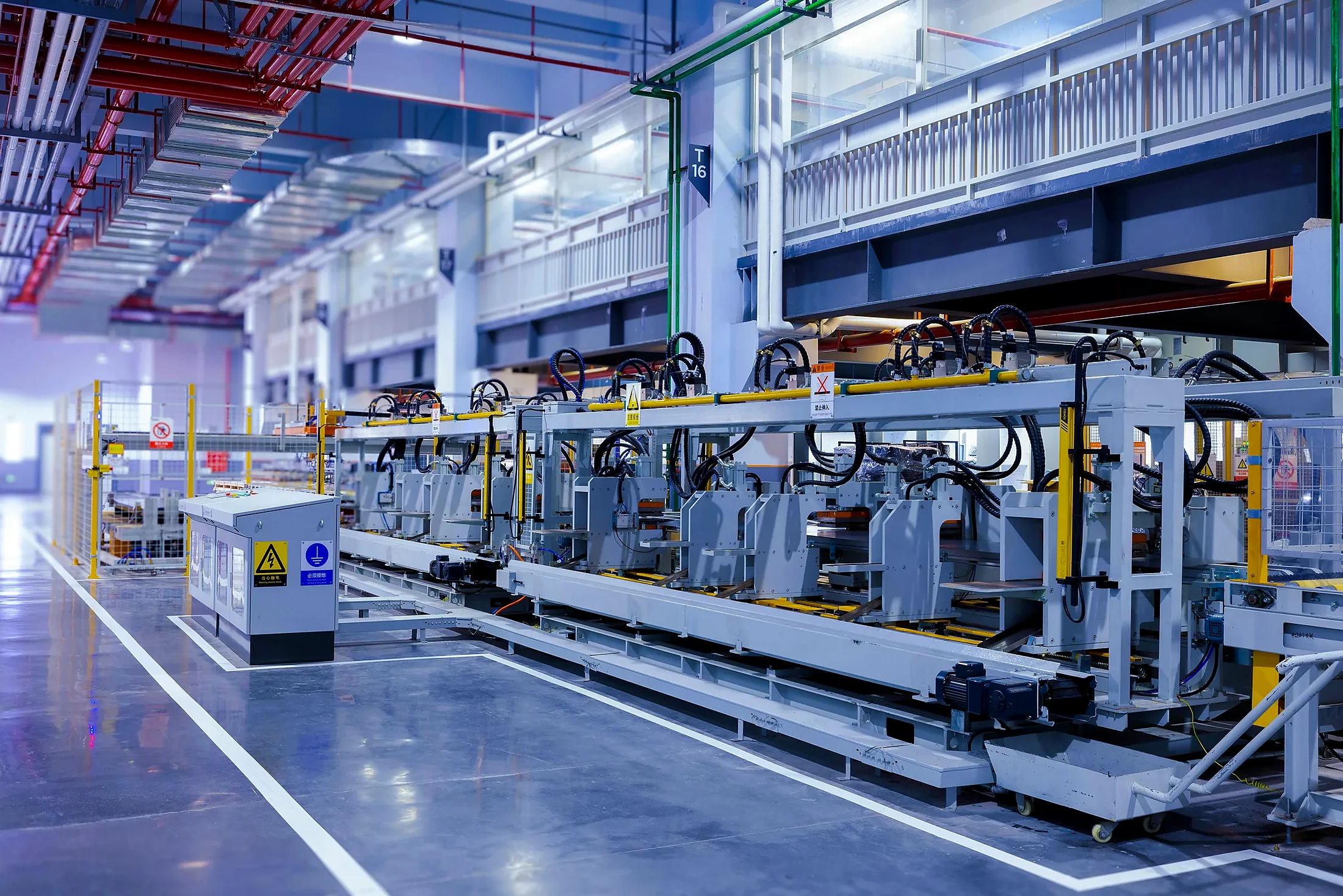
Why retrofit robot cell guarding?
Cells change during their working life. New products, tooling, pallets, conveyors, operating modes or maintenance methods can make the original safeguarding less suitable. Panels may be damaged or moved, openings enlarged, interlocks replaced incorrectly, scanners obscured or reset controls left with poor visibility.
A retrofit can restore the physical boundary and improve how access, stopping and restart work together. It can also make routine loading, fault recovery and maintenance easier to manage, reducing pressure to defeat safeguards.
Typical upgrade scope
- Replace damaged, low or incorrectly positioned mesh and solid panels.
- Add hinged or sliding access gates and improve door alignment.
- Install coded interlocks, guard locking or escape release where required.
- Reconfigure scanners, light curtains and pallet-transfer openings.
- Relocate emergency stops, request-to-enter stations and reset controls.
- Update safety relays or PLC functions and clarify machine interfaces.
- Improve status indication, fault recovery and prevention of unexpected restart.
- Record agreed functional checks and handover information.
How is a retrofit survey carried out?
The review records the current layout, robot and tooling, access points, operating modes, safeguarding devices, stopping behaviour and actual tasks. Existing drawings and safety information are useful, but the installed condition and production practice are equally important.
We identify responsibility boundaries before design. A change to a gate can affect the robot, machine tool, conveyor and process equipment. Mechanical and control modifications therefore need coordinated design and testing.
PUWER and changes to existing machinery
PUWER requires work equipment to be suitable, maintained and provided with effective safeguards and controls. A retrofit should address the identified risk without introducing new reach routes, trapping points or unsafe modes. If changes are extensive, conformity and responsible-person implications should be reviewed before work proceeds.
Planning installation around production
Retrofit work often has to fit a defined shutdown. The design should establish isolation, floor fixing, cable routes, lifting access, temporary controls, commissioning and who will provide robot or machine support. Pre-manufacture measurement and interface checks reduce the work left for the shutdown window.
Information that helps us quote
Send wide photographs of the cell and surrounding floor, close-ups of doors and devices, a layout, robot and tooling details, current issues, the tasks requiring entry and the available shutdown window. We can then recommend whether a desktop review or site risk and guarding survey is the best first step.