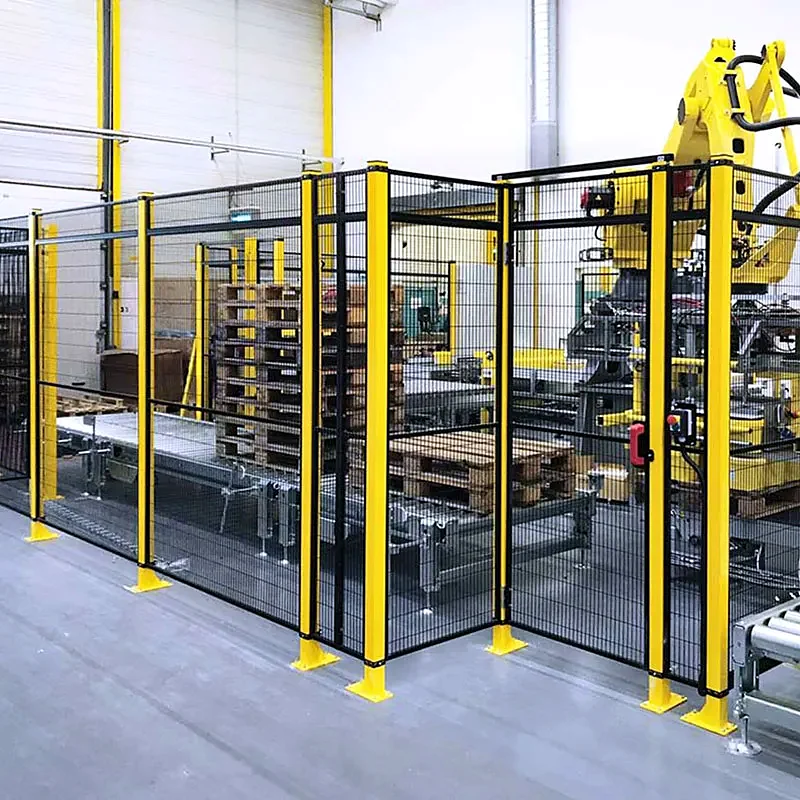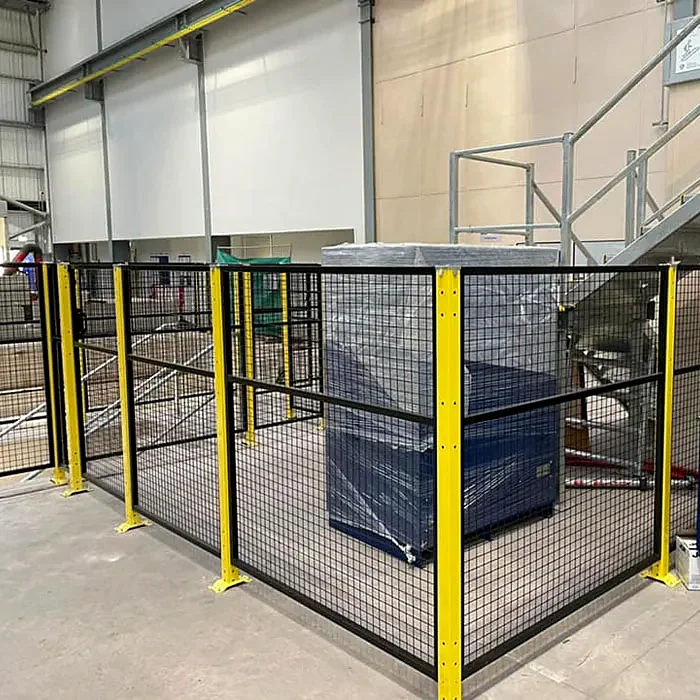
More than a robot fence
Open mesh can define a safety boundary, but the welding process may require solid or screened panels, suitable viewing arrangements, controlled openings, overhead containment and coordination with fume extraction. The material and construction depend on the welding method, energy, trajectory, workpiece and surroundings.
Access for loading, setting and maintenance
Welding cells need access for fixture changes, torch service, wire replacement, cleaning, spatter removal, recovery and maintenance. Gates are positioned around these tasks and can use coded interlocks or guard locking according to stopping performance and release conditions.
Where turntables, positioners or transfer fixtures cross the boundary, the design has to prevent reach routes and crushing or trapping while supporting the production sequence.
Screened panels and visibility
Panel selection balances containment, observation, heat, cleaning and maintenance. Welding-grade viewing material must be selected for the process and installed so operators do not gain a direct line of sight through gaps, doors or transfer openings. The enclosure should also allow safe inspection and replacement of damaged screens.
Safety-control integration
Opening a gate or interrupting a protective device should create the specified safe state across the robot and associated welding equipment. The design considers stored energy, hot parts, extraction, positioners, fault recovery, request-to-enter and restart. Reset should confirm the safeguarded space is clear without initiating hazardous motion.
Existing welding cell upgrades
Older cells can be reviewed for damaged panels, poor containment, unmonitored doors, reach-through gaps, bypassed interlocks, unsuitable viewing arrangements and changes to fixtures or access. See robot guarding retrofits and safety upgrades.
Information needed for a first review
Provide the welding process, robot and positioner details, cell layout, workpiece sizes, loading method, access tasks, extraction arrangement, existing guards and the surrounding workplace. Photographs showing the complete cell and every opening are particularly useful.