What decides whether a cobot needs guarding?
The robot arm is only one part of the machinery. A low-force arm can still present unacceptable risk when it carries a sharp tool, a hot component, a heavy payload or a workpiece that can trap a person against a fixed surface. The application review should consider the robot path, end effector, fixtures, conveyors, neighbouring equipment, foreseeable access and every operating mode.
- Tool and workpiece: cutting edges, pinch points, temperature, stored energy, sharp corners and ejection.
- Speed, force and payload: including the effect of faults, unexpected movement and foreseeable contact.
- Layout: trapping against walls, machines, benches, posts or stored materials.
- People and tasks: loading, teaching, fault recovery, cleaning, inspection and maintenance.
- Process hazards: welding, dispensing, machining, lasers, dust, fluids or hot surfaces can require containment even when robot motion is collaborative.
Four collaborative safety concepts.
Collaborative applications commonly use one or more recognised concepts: safety-rated monitored stop, hand guiding, speed and separation monitoring, and power and force limiting. The chosen concept must match the real task and be implemented through safety-rated functions, suitable devices and a validated control architecture.
Safety-rated monitored stop
Robot motion is stopped while a person occupies the collaborative workspace, with the safety system monitoring the stopped state before interaction is allowed.
Speed and separation monitoring
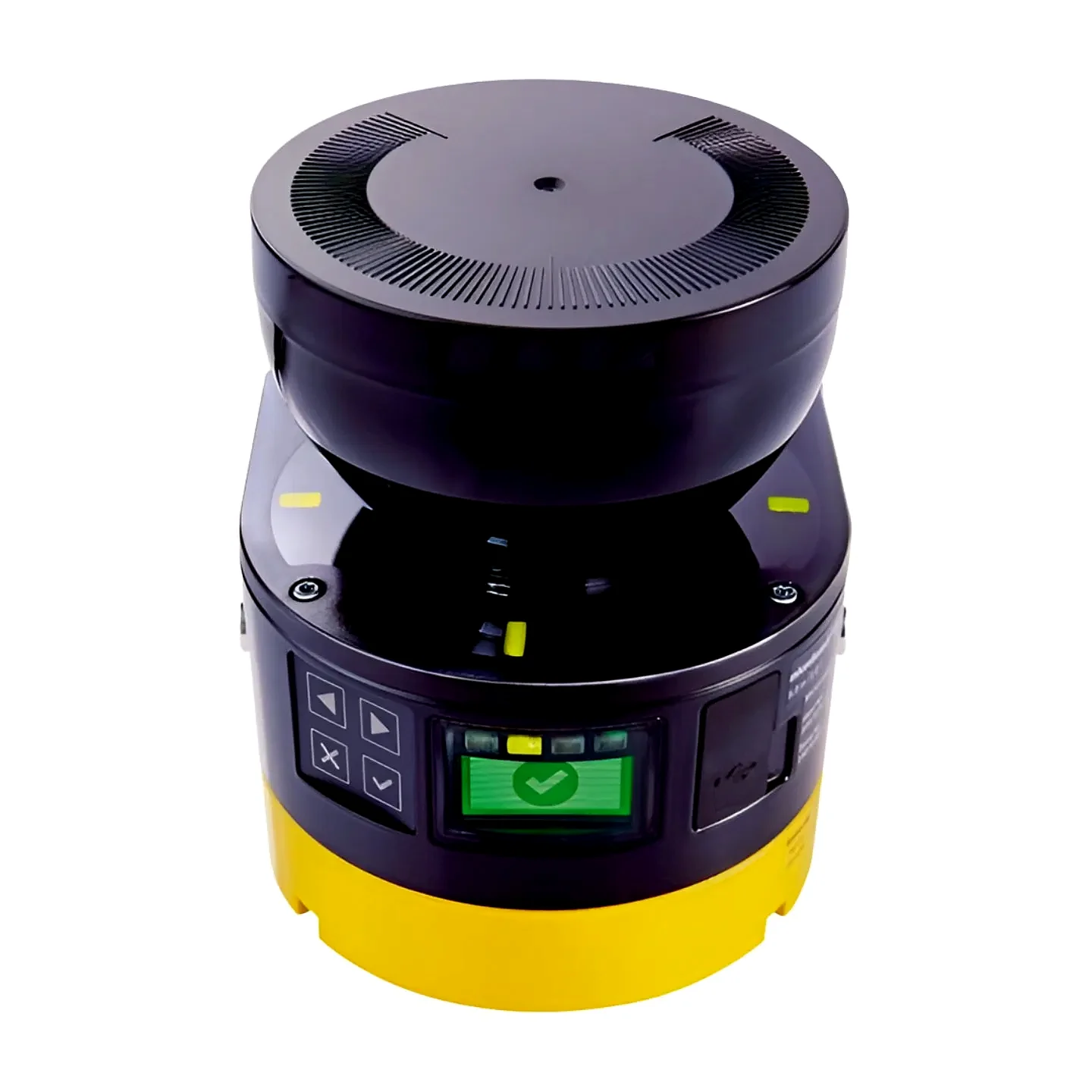
A safety laser scanner or other suitable protective device can define warning and protective fields. The system may reduce speed as a person approaches and stop before protective separation is lost. Field layout, occlusion, floor condition, total response time and robot stopping performance are critical.
Power and force limiting
Risk reduction depends on the complete contact scenario, not a nominal robot rating. Tooling, payload, contact area, body region, speed, clamping and quasi-static trapping all matter. Where contact limits form part of the safety case, the application needs appropriate measurement and validation.
Hand guiding
Hand-guided motion requires deliberate enabling, suitable speed control, a considered start position and protection from hazards created by tooling or the wider process.
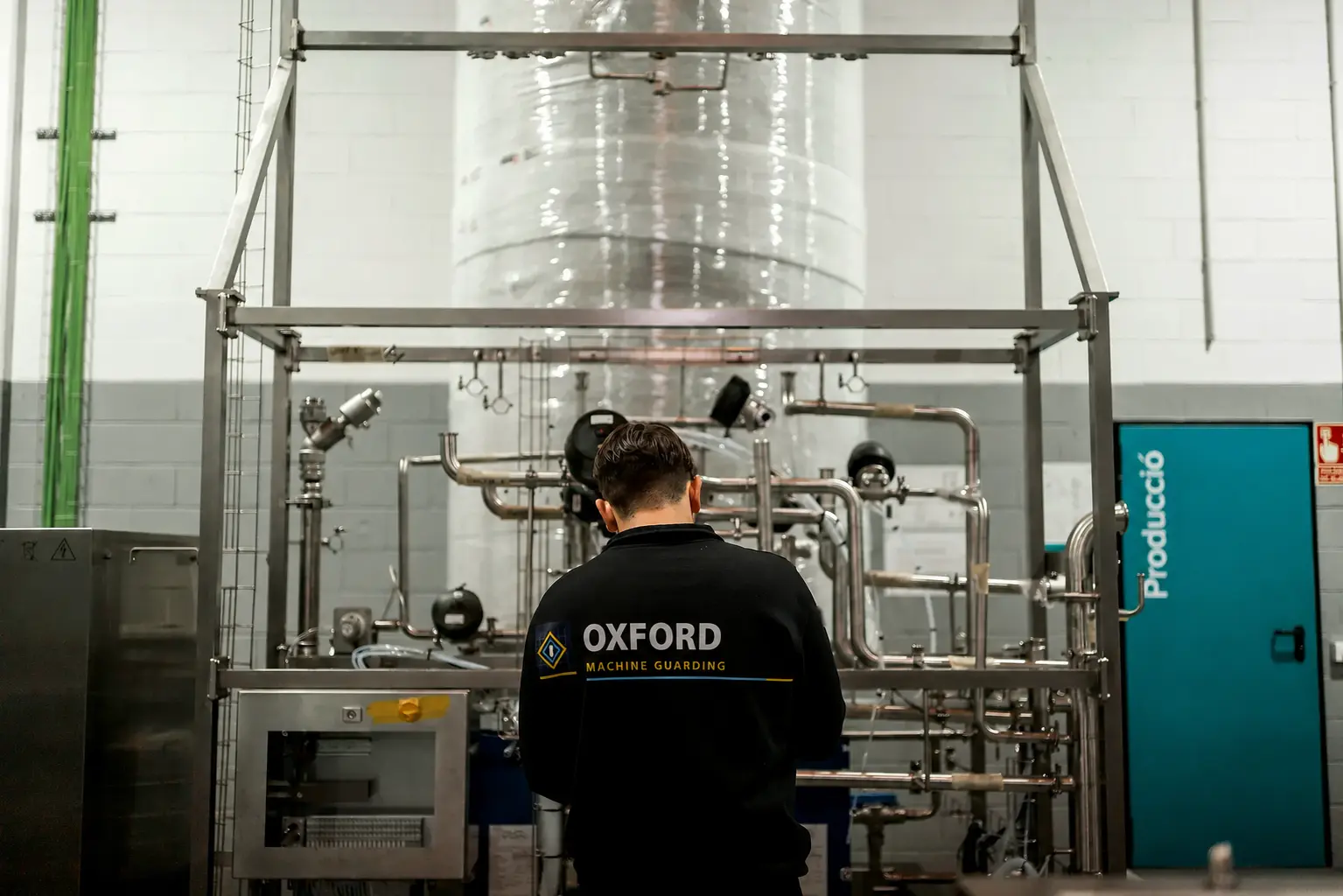
Representative image; garment branding digitally retouched.
When physical fencing is still the right answer.
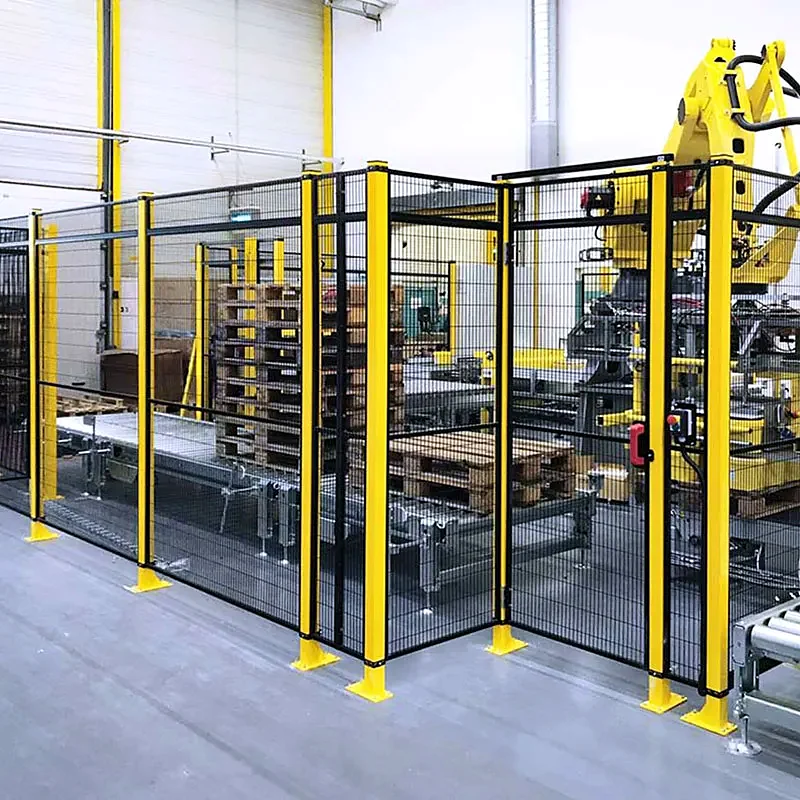
Perimeter guarding can remain the clearest and most robust measure where the application runs quickly, carries hazardous tooling, creates projectiles or process emissions, has multiple trapping points, or needs a predictable boundary between people and automated movement. Hybrid arrangements are also common: fencing around the main hazard, interlocked access for entry and scanners or light curtains at loading points.
Changes that should trigger another review.
Reassess the application after changes to the gripper, payload, product, robot path, speed, operating mode, workstation layout, sensing fields, control software or adjacent machinery. A cell that was acceptable for one part or task may not remain acceptable after a production change.
Plan the safety evidence from the start.
The project scope should identify the required risk assessment, safety-function specification, calculations, device configuration, software records and functional validation. ISO 10218:2025 and current UK machinery-safety requirements should be considered for the actual application and supply arrangement. A component declaration for the cobot does not establish compliance for the integrated cell.