Guard the combined application.
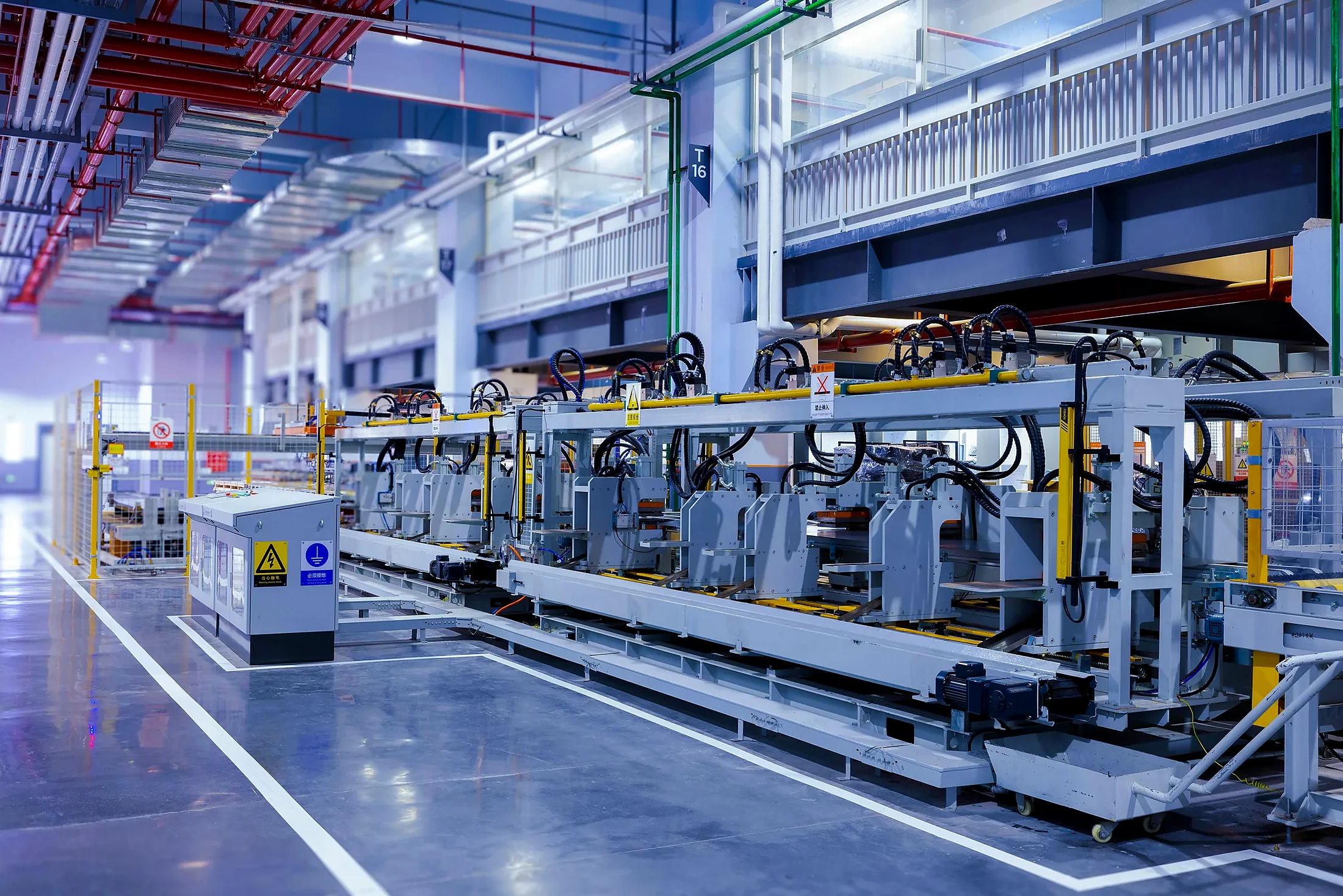
Robot tending is used around CNC lathes and machining centres, presses, injection-moulding machines, test stations and other production equipment. The safeguarding concept must address the robot envelope and end effector as well as the host machine's movement, doors, stored energy, workholding and process hazards.
- CNC and machining: spindle movement, ejected parts, swarf, sharp tools, coolant and automatic doors.
- Press and forming cells: closing movement, transfer points, dies, stored energy and manual intervention.
- Moulding cells: platen movement, hot surfaces, ejectors, part removal and peripheral equipment.
- Inspection and test: frequent part transfer, rejected components, manual sample access and safe recovery.
Machine-door and robot interfaces.
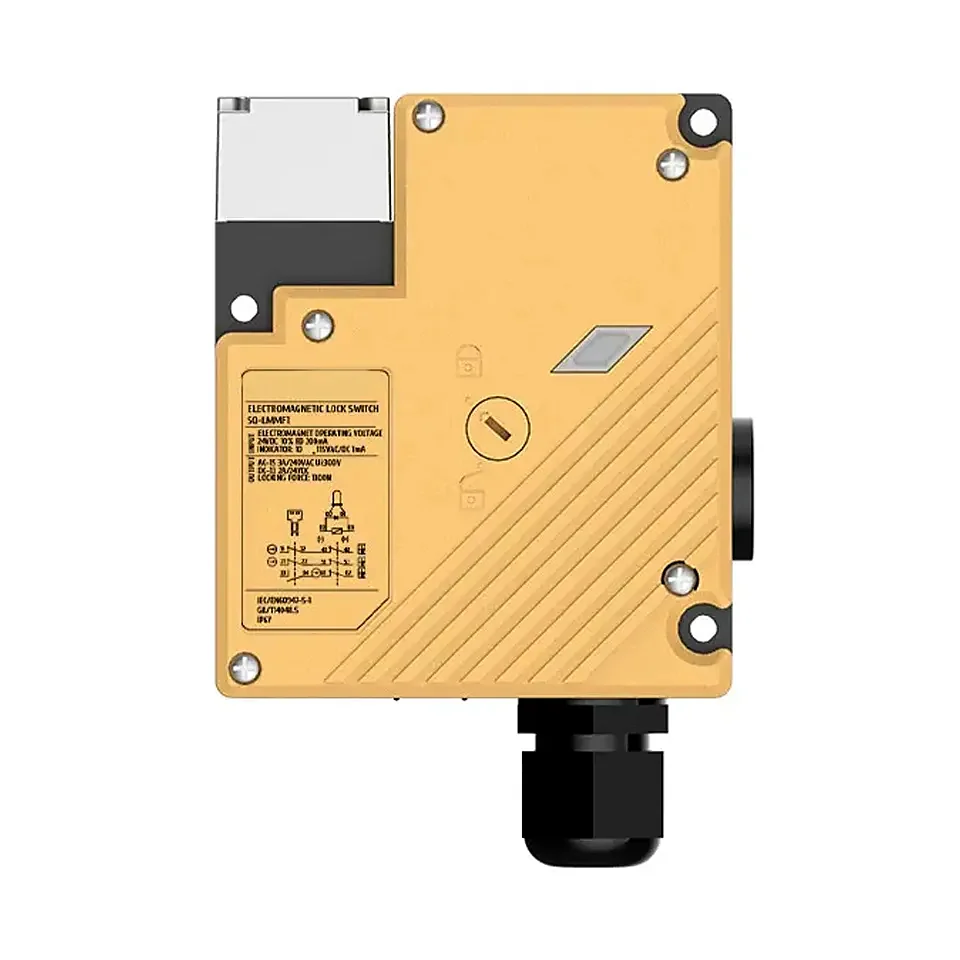
An automatic machine door should not be treated as an isolated convenience function. Its position, locking, control reliability and failure behaviour interact with the robot and operator access. The sequence should establish when the robot may enter the machine, when the machine may cycle, how manual mode is selected and what happens after a stop or fault.
Where the existing machine lacks suitable interfaces or documentation, the limitations should be established before a robot guarding quotation is fixed. A retrofit survey can identify what can be retained, modified or replaced.
Fencing, access and loading points.
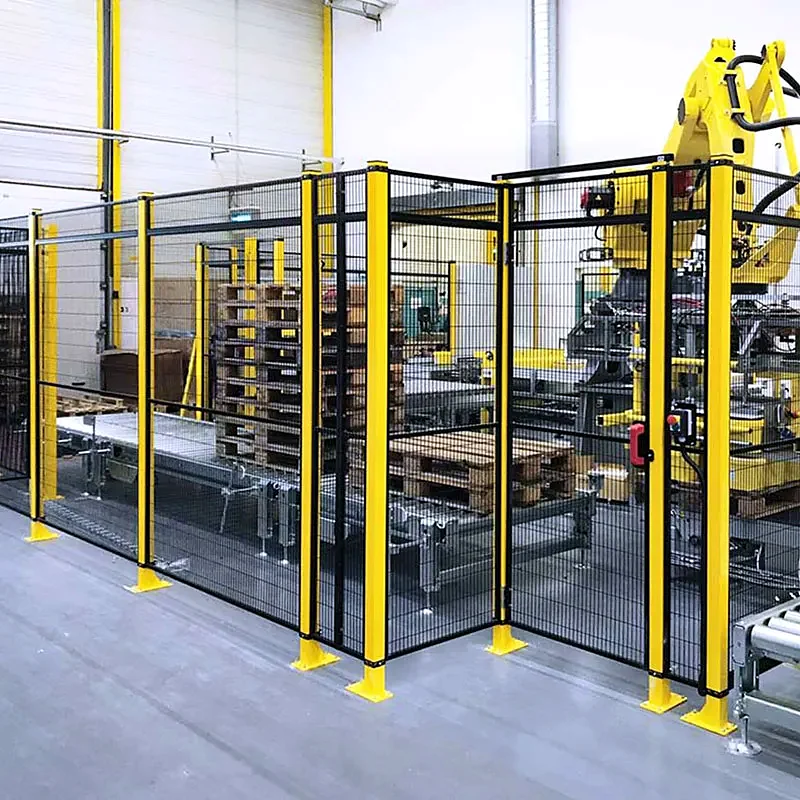
The cell can combine perimeter fencing, interlocked or guard-locked gates, protected part-transfer openings, light curtains or scanners, emergency stops and deliberate reset controls. The layout should support loading, tool changes, swarf removal, cleaning, inspection and maintenance without encouraging operators to bypass a safeguard.
Fault recovery is a design input.
Missed picks, damaged parts, machine alarms, full swarf bins and tooling faults are normal foreseeable events. The project should define who enters, where isolation or safe stop is applied, how trapped persons are prevented, what visibility is available and how the cell is checked before reset. If routine recovery is awkward, bypass pressure usually increases.
Cobot tending still requires an application assessment.
A collaborative robot can help where frequent interaction and limited space are important, but the machine tool and process may remain hazardous. Sharp or hot parts, clamping, crushing, ejection and trapping against the machine can require physical guarding or presence sensing. See the dedicated cobot guarding and collaborative robot safety guide.
Information for an initial guarding review.
Useful inputs include the cell layout, robot and gripper, machine manuals and control drawings, door arrangement, workpiece range, operating sequence, required manual tasks, photographs, stopping information, available space and the production timescale. These let the survey focus on the real interfaces rather than only measuring a fence perimeter.