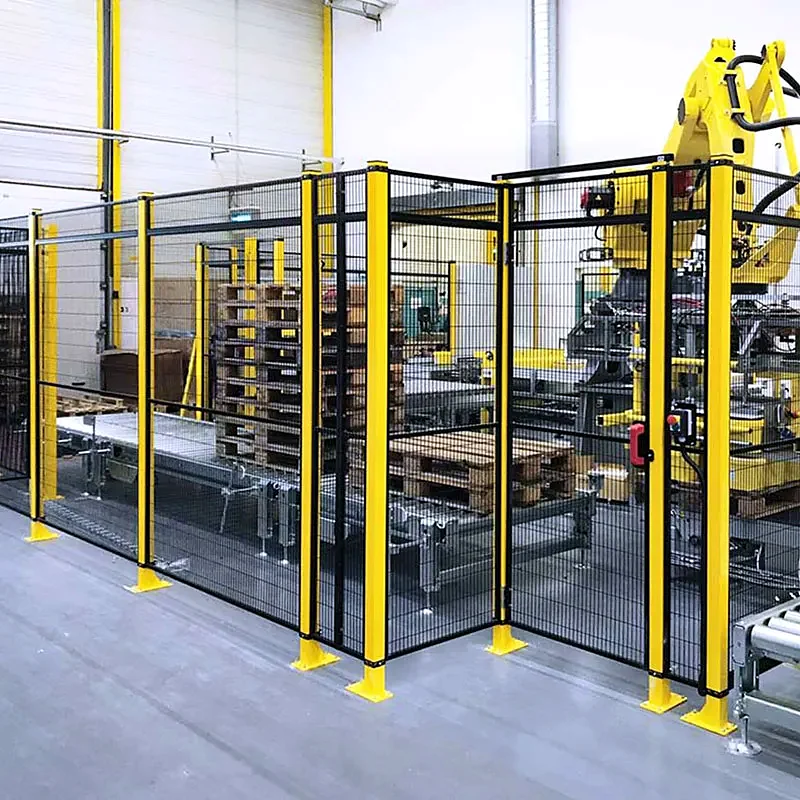
Packaging robot applications.
Robots are used for high-speed pick and place, cartoning, case packing, tray loading, product collation, case handling and end-of-line transfer. The safeguarding concept should reflect the robot type, tooling, payload, conveyor arrangement, rejected-product flow and the people who load, change, clean and recover the line.
- Delta and pick-and-place robots: frequent product transfer, high speed, overhead motion and access for cleaning or product recovery.
- Case-packing cells: cartons, trays, product infeed, case outfeed, tooling change and jam clearance.
- Handling and collation: multiple conveyors, rejected items, buffer zones and interfaces to adjacent machines.
- End-of-line cells: case transfer and links to robotic palletising or depalletising safeguarding.
Protecting conveyor and product-transfer openings.
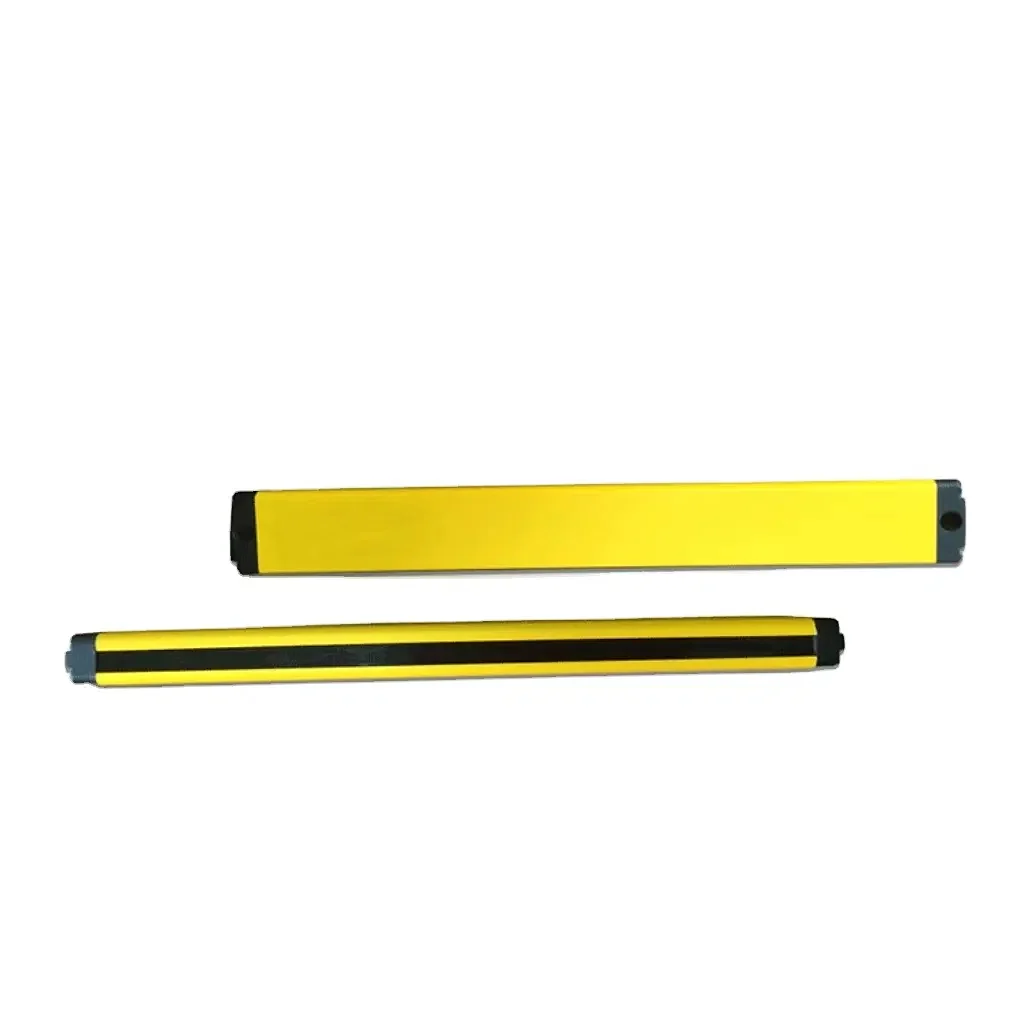
Possible measures include close-profiled openings, tunnels, fixed infill, monitored doors, light curtains or safety scanners, and a suitable muting or material-discrimination function. The design should consider the smallest and largest product, gaps between loads, conveyor reversal, a person following the product, reach along the conveyor and the robot's full tool and payload envelope.
Muting is a safety function, not a bypass.
Muting temporarily suspends a protective device only for an intended transfer under defined conditions. Sensor sequence, timing, direction, load geometry, fault response and status indication should distinguish product movement from human access. The arrangement must return to protection after the load passes and must not create an easy route into the cell.
Changeovers, cleaning and recovery.
Packaging lines often need frequent film, carton, product or tool changes. Operators also clear damaged packs, clean contact surfaces, retrieve dropped products and inspect quality. These foreseeable tasks should influence gate positions, safe access, visibility, escape, isolation, reset and restart logic. A design that protects normal production but makes routine recovery awkward is incomplete.
Integrate the adjacent machinery.
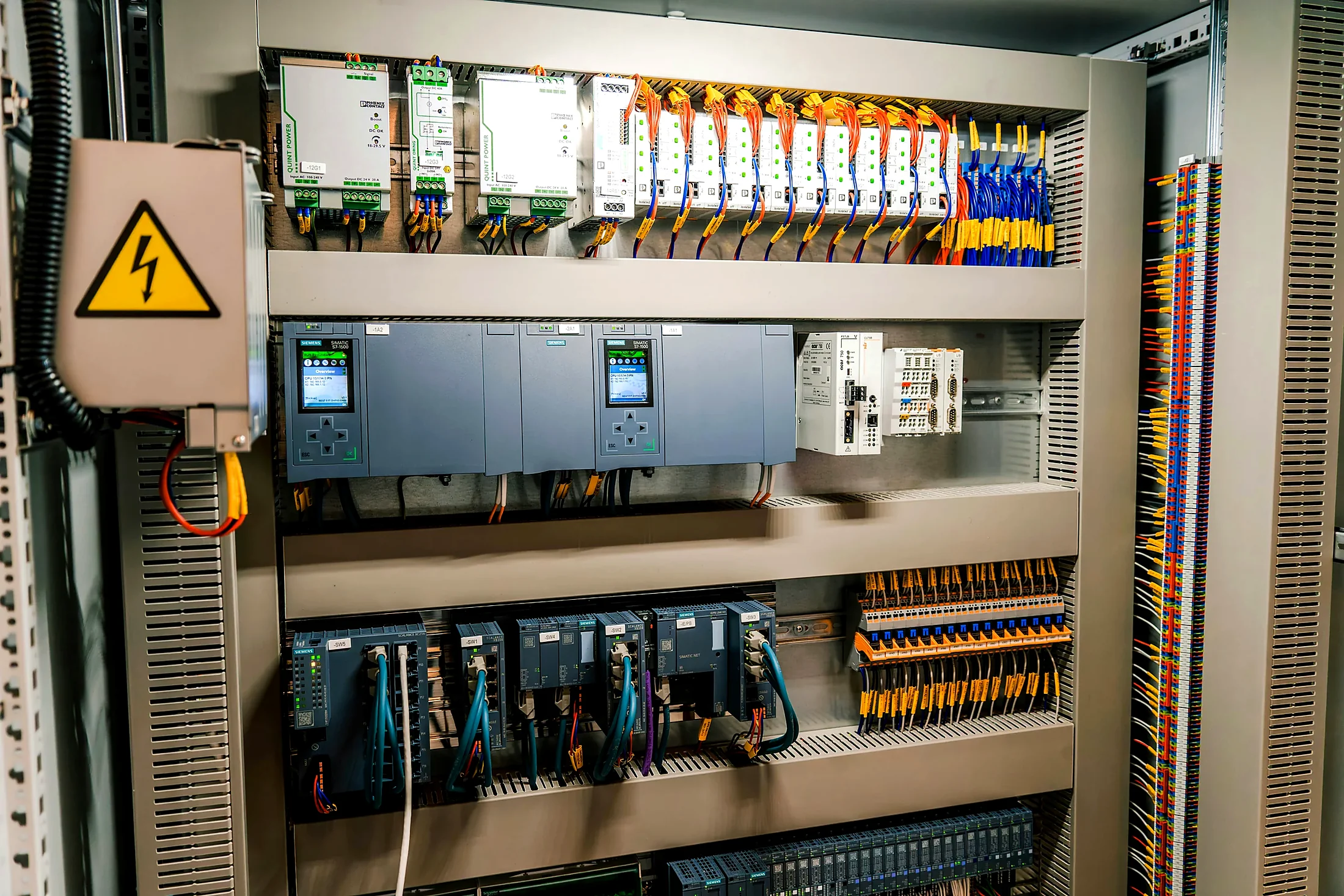
The robot may interact with conveyors, case erectors, sealers, wrappers, coding equipment or other machines that have separate hazards and stopping behaviour. The safety-function specification should identify what each protective device stops, how zones are coordinated, how status is exchanged and who is responsible for the complete machinery assembly.
Retrofit existing packaging robot cells.
Existing fencing and controls can often be reconfigured when format range, access or product flow changes. A robot guarding retrofit survey can review damaged panels, transfer openings, interlocks, scanner fields, reset points, muting arrangements and the current control interfaces before modifications are agreed.
Information for an initial review.
Send the layout, robot and tool, product and pack sizes, conveyor direction and speed, operating sequence, manual tasks, changeover method, photographs, available stopping information and target throughput. These inputs help protect both safety and production performance.